Physical Address
304 North Cardinal St.
Dorchester Center, MA 02124

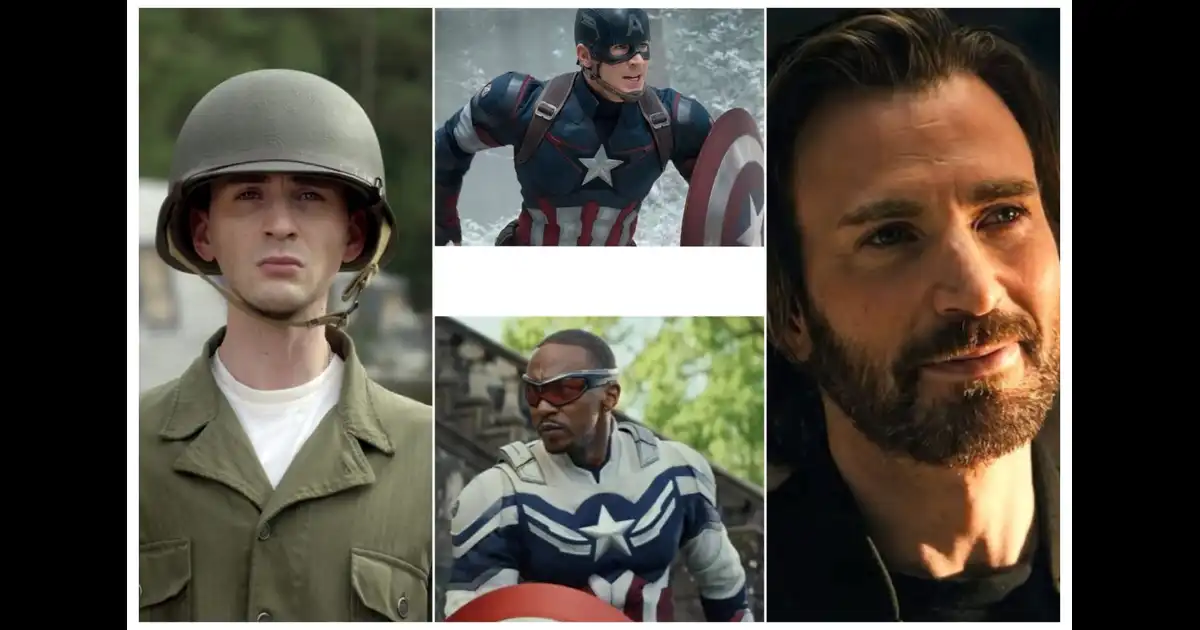
No character in the Marvel Cinematic Universe wears the weight of a moral standard quite like Captain America. It’s a title that has now been carried by two men — Steve Rogers and Sam Wilson — and both are set to appear on screen together for the first time when Avengers: Doomsday arrives on December 18. With the film’s first full trailer premiering at San Diego Comic-Con this past weekend, fan interest in exactly what Captain America brings to this next chapter has never been higher. Here’s a full breakdown of his powers, his ethics, and where he genuinely ranks among Marvel’s biggest heroes.
The current Captain America, Sam Wilson, represents something genuinely unusual in a franchise built largely around super-soldiers, gods and billionaires in powered armor: a hero with no enhanced physiology whatsoever. When Steve Rogers passed the shield to Sam at the end of Avengers: Endgame, he handed the mantle to a man who explicitly chose not to take the super-soldier serum when it was later offered to him during The Falcon and the Winter Soldier — a decision the show treated as one of Sam’s most defining character choices rather than a missed opportunity.
What Sam brings instead is a combination of elite military training, tactical aerial combat experience from his years as an Air Force pararescueman, and technology: his EXO-7 Falcon wingsuit, equipped with retractable wings and the AI-assisted drone Redwing, gives him a mobility and reconnaissance capability no other Captain America has had. Layered on top of that is Wakandan engineering — Shuri redesigned his suit and gave him a new vibranium shield, a gift that visually and symbolically ties Sam’s version of the role to Black Panther’s legacy as much as to Steve Rogers’s. It’s a power set built on skill, technology and alliance rather than raw enhancement, which makes Sam Wilson one of the only headline Avengers whose primary superpower is essentially exceptional competence.
If there’s one thread connecting Steve Rogers and Sam Wilson beyond the shield itself, it’s an almost stubborn insistence on doing the right thing even when it’s costly, unpopular, or strategically unwise. Steve’s entire arc — from turning down the serum’s temptation to become a bully with power, to going rogue against his own government in Captain America: Civil War rather than compromise his principles — established the character as the MCU’s moral compass long before anyone else wore the name.
Sam inherited that same instinct, but explored it through a different lens. The Falcon and the Winter Soldier deliberately interrogated what it means for a Black man to carry a symbol as loaded as “Captain America” in a country with the specific history the United States has, refusing to let Sam simply slot into Steve’s old identity without wrestling with what the shield actually represents to different communities. That thread carried into 2025’s Captain America: Brave New World, where Sam’s insistence on diplomacy and de-escalation — even during an international incident that would have justified a much more aggressive response from almost any other hero in the franchise — became the film’s central ethical statement. Sam Wilson’s Captain America isn’t defined by strength. He’s defined by restraint, by an unwillingness to escalate when de-escalation is still possible, and by a consistent refusal to let power make decisions that empathy should be making instead.
Every major hero in the MCU sacrifices something, but Captain America’s sacrifices tend to be structural rather than singular — not one big moment, but a career built entirely around subordinating personal desire to collective duty. Steve Rogers spent decades frozen in ice, missing an entire life with Peggy Carter, and when he finally got the chance to reclaim that life at the end of Endgame, the story treated it less as an escape and more as a hard-earned exception to a lifetime of sacrifice, one he only allowed himself after ensuring the shield passed to someone he trusted completely.
Sam Wilson’s sacrifice runs differently but no less deeply: a man who spent years supporting other soldiers through trauma as a VA counselor, who nearly lost his family’s fishing boat to financial hardship even while working as an Avenger, and who ultimately accepted a role that comes with target-painted danger and relentless public scrutiny specifically because he believed someone with his values needed to hold it. There’s no serum making that choice easier for him. Every risk Sam takes as Captain America, he takes as a fundamentally normal, mortal human being — which arguably makes his willingness to keep stepping into danger more remarkable, not less.
Ranking heroes across a franchise this large always involves some degree of subjectivity, but a few criteria hold up consistently: raw power, narrative influence, moral authority, and sheer indispensability to the stories being told. On pure power, Captain America — either version — sits comfortably behind cosmic-tier characters like Thor, Captain Marvel, or Scarlet Witch, and even behind tech-and-resource powerhouses like Iron Man at his peak. Nobody watching the MCU would argue Captain America wins a straight power contest against a god or a being who can rewrite reality.
But power alone has never been the full measure of standing in this franchise, and by every other metric, Captain America ranks at or extremely near the top. Steve Rogers was, by wide critical and fan consensus, the emotional and moral center of the original Avengers lineup — the character whose decisions the team organized around, and whose death in Endgame (or rather, his choice to live a full life offstage before returning the shield) closed out the Infinity Saga’s central emotional arc. Sam Wilson inherits that same structural importance heading into Doomsday: of the enormous ensemble cast assembled for the film, few characters carry the specific narrative weight of literally being the person entrusted with continuing Captain America’s legacy during the franchise’s biggest crossover event since Endgame itself.
The excitement around Captain America’s presence in Avengers: Doomsday isn’t just about a beloved character showing up — it’s about an unprecedented moment where both people who have held the title appear in the same film. The very first Doomsday teaser, released quietly in December 2025, revealed that Chris Evans would return as Steve Rogers, showing him retired, domestic, and seemingly living the peaceful life with Peggy Carter that Endgame had only hinted at — a reveal made all the more significant with Hayley Atwell’s involvement in Doomsday since confirmed. Meanwhile, Anthony Mackie’s Sam Wilson has been front and center in every subsequent trailer and Comic-Con costume display, his vibranium shield showcased prominently at Marvel’s SDCC booth alongside gear from Thor, the Fantastic Four, and the Thunderbolts.
Mackie himself has been vocal about what he believes Doomsday represents for the franchise, telling IGN earlier this year that the film — with directors Joe and Anthony Russo back for their first Marvel feature since Endgame — is going to “give the audience that old Marvel feeling” following a stretch of less commercially successful releases including Ant-Man and the Wasp: Quantumania, The Marvels, and Brave New World itself. For a hero whose entire identity is built on carrying weight other people can’t, or won’t, Captain America returning at the center of Marvel’s attempt to recapture its biggest, most confident storytelling instincts feels, in its own way, entirely fitting.
Captain America has never been the MCU’s strongest fighter, its flashiest presence, or its most powerful being by any conventional measure. What both Steve Rogers and Sam Wilson have consistently offered instead is something the franchise has repeatedly proven it can’t function without: a moral anchor willing to sacrifice comfort, safety and personal desire for a standard neither man ever expected anyone to actually meet. As Avengers: Doomsday approaches, with both men now confirmed to share the screen, that combination of quiet sacrifice and unwavering ethics looks set to matter as much to the story ahead as any individual power ever could.
🔹🔹 🔹🔹