Physical Address
304 North Cardinal St.
Dorchester Center, MA 02124

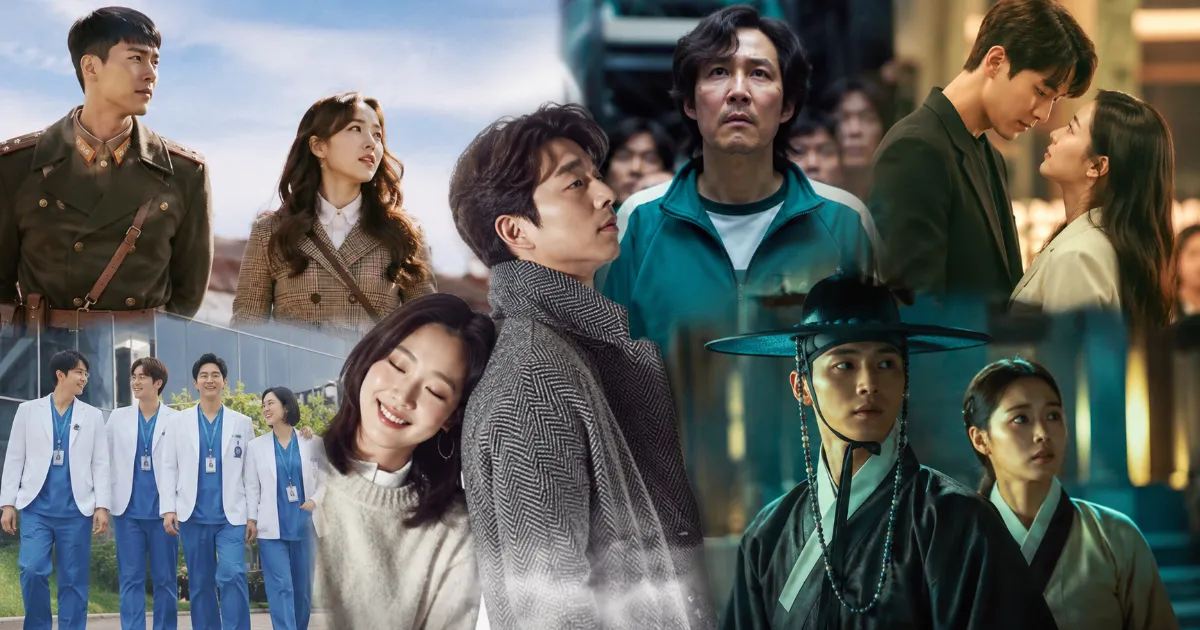
Korean dramas have become one of the most influential storytelling exports in the world, and the genre’s biggest strength is its range. Ask ten K-drama fans for their favorite show and you’ll get ten completely different answers — because unlike most television industries, Korean dramas don’t stay in one lane. A single year of releases can span sweeping historical epics, workplace slice-of-life dramas, supernatural romances, and brutal survival thrillers, often with the same production quality and emotional depth across all of them.
This list of 13 must-watch Korean dramas is built specifically to represent that range. Rather than stacking the list with romance alone, it moves across genres — rom-com, fantasy, survival thriller, coming-of-age, medical slice-of-life, medical melodrama, revenge saga, psychological thriller, historical horror, melodrama, and crime dark comedy — so that whether you’re a die-hard romance fan or someone who wants nothing to do with love triangles, there’s something here worth your time.
George Michael Faith Tour Trailer Resurrects a Lost Night in Paris
13 Must-Watch Pakistani Dramas That Define a Golden Era of Storytelling
No list of essential Korean dramas is complete without Crash Landing on You. Starring Hyun Bin and Son Ye-jin, the story follows a South Korean heiress who accidentally paraglides into North Korea and falls for the army officer who hides her from authorities. It blends forbidden romance with political tension, family drama, and genuinely funny comic relief from its supporting cast.
The drama became the third highest-rated Korean drama in cable television history and set records for its network, tvN. Its emotional range — from laugh-out-loud comedy to devastating farewell scenes — is exactly why it’s the most recommended entry point for anyone new to Korean dramas.
If Crash Landing on You is the emotional heavyweight of the genre, Business Proposal is the pure comfort watch. The story follows a woman who agrees to go on a blind date pretending to be her friend, only to discover the date is actually her company’s CEO. What follows is a lighthearted, fast-paced rom-com built on mistaken identity, workplace tension, and genuinely charming chemistry between its leads.
Business Proposal is frequently cited as the ideal entry point for K-drama newcomers who want something fun and low-stakes rather than an emotionally heavy commitment. Its brisk pacing and comedic tone make it one of the most rewatchable dramas on this list.
Goblin, also known as Guardian: The Lonely and Great God, follows Kim Shin, an immortal goblin cursed centuries ago, who can only find peace by locating his human bride. Starring Gong Yoo, the drama blends fantasy, mythology, and romance into a story that became a genuine cultural phenomenon across Asia upon release.
What sets Goblin apart is its ability to make viewers feel every emotional beat deeply and lingeringly, aided by a soundtrack that remains one of the most recognizable in K-drama history. It’s the drama fans return to when they want beauty and heartbreak in equal measure.
Squid Game needs little introduction at this point — it became Netflix’s most-watched non-English-language series ever and the first non-English show nominated for Outstanding Drama Series at the Emmys. The premise is brutally simple: 456 financially desperate contestants compete in deadly versions of childhood games for a life-changing cash prize, with elimination meaning death rather than simple disqualification.
Beyond its shock value, Squid Game works because of its sharp social commentary on class, debt, and desperation. It’s the drama most responsible for bringing Korean television to a truly global mainstream audience, and its influence on the genre’s international visibility cannot be overstated.
Reply 1988 takes a completely different approach from the rest of this list, trading romance-driven plotting for a warm, nostalgic portrait of five childhood friends and their families living on the same street in 1980s Seoul. The show is less concerned with a single central love story than with the everyday texture of family, friendship, and growing up.
Its slow-burn central romance (part of a mystery the show teases across its run) is almost secondary to its real strength: some of the most emotionally authentic family relationships ever portrayed in Korean television. It’s frequently ranked among the highest-rated Korean dramas of all time on domestic review platforms.
Hospital Playlist follows five doctors who have been close friends since medical school, now working together at the same hospital while also playing in a band together. Rather than leaning into medical-drama tropes of constant life-or-death tension, the show spends as much time on friendship, mentorship, and the small human moments of hospital life as it does on surgery scenes.
Its ensemble cast and low-conflict, character-driven storytelling make it one of the most comforting long-form watches in the genre — a drama that rewards patience with genuine emotional payoff built over two full seasons.
Itaewon Class follows a young man who, after a personal tragedy caused by a powerful food conglomerate’s heir, spends years building a small bar into a business empire to enact his revenge. Starring Park Seo-joon, the drama blends underdog business drama with themes of prejudice, class conflict, and long-simmering justice.
The show’s willingness to tackle real social issues — including discrimination based on background, gender identity, and criminal history — alongside its central revenge plot gives it more substance than a typical business drama, making it a standout entry for viewers who want stakes beyond romance.
Kingdom transplants the zombie genre into Korea’s Joseon dynasty, following a crown prince investigating a mysterious plague that turns victims into the undead while a political conspiracy threatens the throne. The combination of period-drama court intrigue with genuinely tense horror set pieces makes it one of the most distinctive entries in the entire Korean drama landscape.
Its production values — sweeping historical costuming and set design paired with genuinely unsettling horror sequences — helped establish that Korean dramas could compete with, and often exceed, the genre-blending ambition of Western prestige television.
My Mister is widely regarded as one of the most quietly devastating dramas ever made in Korea, following an unlikely bond between a middle-aged engineer worn down by life’s disappointments and a young woman burdened by debt and hardship. Starring IU in a career-redefining dramatic role, the show avoids romance entirely, instead building its emotional core around empathy, healing, and human connection across generational lines.
Its slow, deliberate pacing and refusal to offer easy resolutions have made it a favorite among viewers seeking something more literary and emotionally mature than the genre’s typical offerings.
Vincenzo follows a Korean-Italian mafia lawyer who returns to Korea and uses his ruthless mob tactics to take down a corrupt conglomerate, blending stylish action, dark humor, and morally gray heroism. Starring Song Joong-ki, the show moves fast, rewards close attention to its many schemes, and never takes itself too seriously even as its stakes escalate.
It’s the drama for viewers who want something with genre-bending energy — equal parts crime thriller, courtroom drama, and comedy — anchored by a lead character who operates entirely outside conventional heroic norms.
Signal follows a modern-day detective who discovers a walkie-talkie that allows him to communicate with a detective from the past, and together they work to solve cold cases that reshape both of their present-day realities. The time-bending mystery structure, combined with genuinely gripping case-of-the-week storytelling, makes it one of the most acclaimed crime thrillers in the genre’s history.
Signal balances its central mystery with real emotional weight, exploring how small changes to the past ripple forward in ways neither detective can fully predict. It remains a benchmark for how Korean dramas can use genre mechanics to tell a story with genuine emotional stakes.
Where Hospital Playlist takes a slow, ensemble-driven approach to hospital life, Doctor Romantic goes in the opposite direction — high-stakes surgical drama built around Kim Sabu, a brilliant but disillusioned surgeon running a small rural hospital, and the young doctors he mentors after they’re sent there under difficult circumstances. Starring Han Suk-kyu, the show blends intense operating-room tension with a mentor-mentee dynamic and a slow-burn romance between two of its younger leads.
The drama became successful enough to spawn two sequel seasons, a rare feat for the genre, and it’s frequently cited as one of the definitive doctor romantic dramas precisely because it balances medical crisis, workplace hierarchy politics, and genuine emotional warmth without ever feeling formulaic. For viewers who want their medical drama to carry real life-or-death tension alongside the romance, this is the essential entry point.
The Glory follows a woman who spends nearly two decades meticulously planning revenge against the classmates who brutally bullied her in high school, executing a slow, calculated plan that unfolds across both timelines. Starring Song Hye-kyo, the drama trades the fast-paced action of shows like Vincenzo for something colder and more deliberate — a study in trauma, patience, and the psychological toll revenge takes on the person seeking it.
The show became a global phenomenon following its Netflix release, sparking real conversations in South Korea about school violence and accountability. Its unflinching tone and methodical pacing make it one of the more emotionally demanding entries on this list, but also one of the most talked-about Korean dramas of the past several years.
Nearly all 13 dramas on this list are available through major streaming platforms, making this an easy watchlist to actually complete. Netflix carries Crash Landing on You, Business Proposal, Squid Game, Kingdom, My Mister, Vincenzo, Hospital Playlist, and The Glory, making it the single most useful platform for working through this list. Goblin, Itaewon Class, Signal, and Doctor Romantic are available through a mix of Netflix and Viki depending on region, while Reply 1988 has historically been available through Viki and select regional streaming services. Availability can shift by country due to licensing agreements, so it’s worth checking your specific region’s catalog before starting.
Several dramas on this list carry significant industry recognition that underscores their standing within the genre. Squid Game made history as the first non-English-language series ever nominated for Outstanding Drama Series at the Emmys, along with acting nominations that were unprecedented for Korean television at the time. Crash Landing on You won recognition at the Asian Academy Creative Awards and set viewership records for its network that still get referenced years later.
Reply 1988 remains one of the highest-rated dramas in Korean television history on domestic review aggregators, a distinction that speaks to how deeply it resonated with local audiences even as it built an international following. My Mister earned significant critical acclaim for its writing and for IU’s performance, often cited in critic circles as one of the most underrated dramas of its decade. The Glory, meanwhile, became one of the most-discussed Korean dramas globally following its release, prompting real policy conversations in South Korea about accountability for school violence — a reminder that some of the genre’s best work doesn’t always come with the loudest marketing push, while some of it reshapes public conversation entirely.
One thing worth knowing before diving into this list: Korean dramas typically run between 12 and 20 episodes, with each episode lasting anywhere from 60 to 90 minutes — noticeably longer than the standard American network TV episode. That means even a single drama on this list represents a real time commitment, often comparable to multiple seasons of a Western series. Planning your viewing schedule accordingly, rather than assuming a K-drama will move at the pace of a typical 22-minute sitcom, will make the experience far more enjoyable and less overwhelming.
With 11 dramas spanning this many genres, the right starting point really depends on what you’re looking for.
If you want maximum emotional range in one show: Start with Crash Landing on You. It remains the most complete introduction to what Korean dramas do best.
If you want something fun and low-commitment: Business Proposal or Vincenzo will hook you fast without demanding the emotional investment of a heavier drama.
If you want prestige, genre-bending ambition: Kingdom and Squid Game both prove Korean dramas can go toe-to-toe with any television being made globally right now.
If you want something quieter and more reflective: My Mister and Reply 1988 offer the kind of slow, character-driven storytelling that rewards patience with real emotional depth.
If you want mystery and plotting that demands attention: Signal and Itaewon Class both deliver satisfying, tightly constructed narratives that reward viewers who like piecing things together.
If you want a doctor romantic drama with real stakes: Doctor Romantic delivers exactly that — high-pressure surgical drama paired with a slow-burn romance and one of the genre’s most compelling mentor figures.
If you want a darker, more deliberate revenge story: The Glory is the drama for viewers ready to sit with something heavier and more psychologically demanding than a typical thriller.
What unites all 11 of these dramas, despite their vastly different genres, is a consistent commitment to emotional honesty and tight, purposeful storytelling. Most Korean dramas run a single season of 12 to 20 episodes, which forces writers to commit fully to their story rather than stretching plotlines for the sake of renewal. That structural discipline is a major reason the genre has found such a devoted global following — viewers know that when they start a Korean drama, they’re getting a complete, deliberately crafted story rather than an open-ended commitment.
Whether you’re drawn in by a sweeping romance like Crash Landing on You or a brutal social thriller like Squid Game, this list is designed to show just how far the genre’s range actually extends — and why so many first-time viewers end up watching far more than just one.
Which Korean drama on this list would you recommend to a first-time viewer? Share your pick in the comments.
Zanjeerein Drama Review: A Slow-Burning Story of Love, Betrayal and Power Politics