Physical Address
304 North Cardinal St.
Dorchester Center, MA 02124

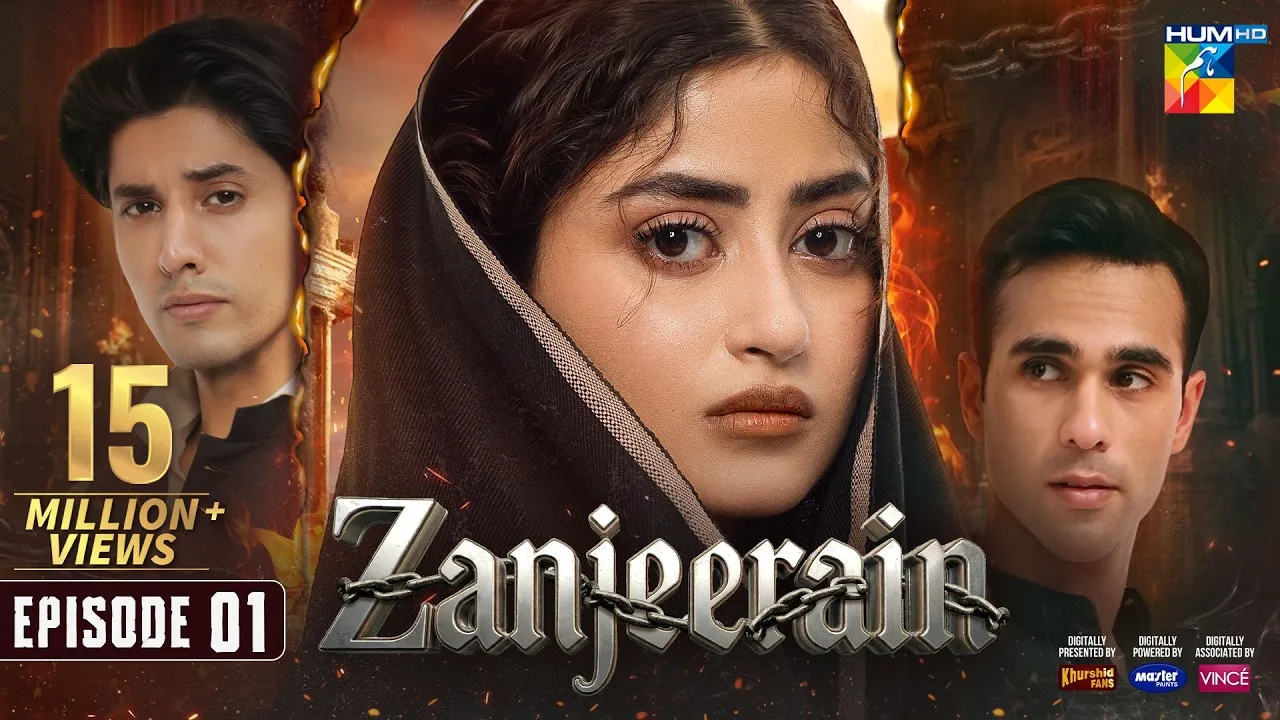
Zanjeerein is one of those Pakistani dramas that can test the patience of its viewers while still managing to keep them emotionally invested. As the drama moves toward its ending, it is clear that the show has had both significant strengths and noticeable weaknesses. The pacing has often been slow, some plot developments have felt unnecessarily stretched, and a few character decisions have raised questions. Yet, despite these flaws, Zanjeerein has succeeded in building an audience through its powerful love story, betrayal, family conflicts and increasingly dangerous power politics.
Haiwaan Trailer Review: Akshay Kumar and Saif Ali Khan Lead Priyadarshan’s Promising New Thriller
15 Best Naruto Episodes That Every Fan Remembers
Written by Farhat Ishtiaq and directed by Shahzad Kashmiri, the drama features Sajal Aly, Daniyal Zafar, Ameer Gilani, Sahar Hashmi, Ahsan Khan, Adnan Siddiqui, Samiya Mumtaz and others in important roles. The combination of Farhat Ishtiaq’s character-driven writing and Shahzad Kashmiri’s visual direction gave the drama a strong foundation from the beginning.
At its heart, Zanjeerein is not simply a love story. It gradually develops into a story about people trapped by family history, revenge, social expectations and political power.
The romantic side of the drama initially provides an emotional escape from the darker world surrounding the characters. The relationship between Rabiya and Muddasir is one of the most enjoyable aspects of the show because it gives the audience warmth before the story becomes increasingly tragic.
Muddasir’s character is particularly important to the emotional structure of the drama. His relationship with Rabiya creates a sense of normality in an otherwise dangerous world. When that happiness is destroyed, the impact feels considerably stronger because the audience has already been given time to become attached to them.
The drama’s other major storyline revolves around Sar Buland and the complicated power structure surrounding him. What makes this part interesting is the contrast between someone who initially appears disconnected from the complicated politics around him and the position he eventually finds himself occupying.
If there is one element of Zanjeerein that deserves considerable praise, it is the romance.
Rabiya and Muddasir’s relationship does not feel like a romance inserted merely to satisfy the audience. Their everyday interactions give the relationship a relatively natural quality. Their happiness, conversations and small moments together make the later tragedy more effective.
This is also where the show’s slower pacing sometimes works in its favor.
Although several episodes could have been shorter, the time spent establishing relationships means that certain emotional developments carry more weight. The audience understands what the characters are losing.
That emotional investment is one reason viewers continued watching even when the main plot appeared to move slowly.
There is no denying that Zanjeerein has been slow.
Audience discussions have repeatedly pointed out that several episodes contained scenes that felt stretched, particularly when the central storyline appeared ready to move forward. Early audience reactions also described the drama as slow while praising the performances and the larger mystery.
The problem isn’t necessarily that the drama takes its time. Slow-burn storytelling can be extremely effective.
The problem is that some scenes don’t always provide enough new information, character development or tension to justify their length.
A tighter edit could have made the drama considerably more powerful.
There are moments when viewers can understand what is coming several scenes before the characters reach the same conclusion. That creates frustration rather than suspense.
One of the most questionable aspects of the story is the handling of Rabiya’s knowledge about her husband’s killer.
This is where the writing creates a genuine problem for the audience.
When a character possesses information that could fundamentally change the direction of the story, keeping that information hidden needs to have a convincing emotional or logical explanation. In Rabiya’s case, the decision not to reveal the name of her husband’s killer can feel unnecessarily convenient from a storytelling perspective.
It creates the impression that the plot is delaying a revelation because the story needs more episodes rather than because the character has a compelling reason to remain silent.
This is one of the loopholes that could have been handled better.
The writers could have provided a stronger psychological reason for Rabiya’s silence, perhaps by showing her fear, uncertainty, lack of evidence or concern for another character. Without enough explanation, the decision can feel forced.
The betrayal element is another reason Zanjeerein remains interesting.
The drama understands that betrayal is most effective when it comes from someone the characters trust. Rather than relying entirely on obvious villains, the story builds an environment where alliances can change and apparently harmless decisions can have serious consequences.
This gives the power struggle a dangerous quality.
The audience is repeatedly reminded that characters are not necessarily what they appear to be. Loyalty, family relationships and political alliances all come with conditions.
That makes the later episodes considerably more engaging than the slower early portions of the drama.
One of the most intriguing developments is the rise of a person who initially appears largely unaware of the complicated world of power politics but eventually finds himself in a position of authority.
That transformation gives the story another dimension.
The character isn’t simply handed power in a conventional hero’s journey. Instead, the surrounding political environment gradually forces him to understand the rules of a world he previously did not fully comprehend.
This is where the title Zanjeerein becomes particularly meaningful.
The characters are trapped not only by physical circumstances but also by family obligations, revenge, social structures and political expectations.
The more power they gain, the more complicated their chains become.
Sajal Aly remains one of the strongest performers in the drama.
As Rabiya, she has to portray multiple emotional states: love, vulnerability, grief, confusion, strength and determination. Some viewers have found the character somewhat one-dimensional in portions of the story, but Aly’s performance still provides the character with emotional presence. Audience discussions have particularly highlighted the emotional impact of Rabiya’s storyline.
Her biggest advantage is her ability to communicate emotion without relying entirely on dialogue.
Even when the writing becomes repetitive, Sajal Aly’s performance keeps Rabiya watchable.
Daniyal Zafar has arguably had one of the more interesting journeys in the drama.
His performance isn’t perfect, and some viewers have questioned whether the intensity of his character always suits him. However, he has clearly demonstrated growth as the story has progressed.
The political and dramatic scenes have given him an opportunity to move beyond lighter performances and attempt something more serious.
His chemistry with the rest of the ensemble also helps the drama maintain its momentum when the screenplay slows down.
Ameer Gilani, as Muddasir, contributes significantly to the emotional side of the drama.
His character works because he represents something relatively uncomplicated in a story filled with manipulation and political games. Muddasir’s relationship with Rabiya gives the audience a reason to emotionally invest in the domestic side of the narrative.
His tragic storyline consequently becomes one of the drama’s most painful developments.
Sahar Hashmi has also made an impression, particularly through the character of Sher Bano.
Interestingly, audience discussions have suggested that the Sher Bano storyline was among the more engaging portions of the drama, with some viewers feeling that the show’s energy changed after her departure.
Ahsan Khan brings the necessary intensity to his role, while Adnan Siddiqui is particularly effective in the political and manipulative portions of the story.
The supporting cast deserves credit because Zanjeerein depends heavily on its ensemble. The drama would not work as effectively if the surrounding characters lacked personality and conflict.
Shahzad Kashmiri’s direction is another major strength.
The drama has a cinematic visual identity, particularly in its outdoor and mountainous settings. The visual atmosphere helps distinguish Zanjeerein from conventional urban family dramas.
The direction also gives the story a sense of scale. The world feels larger than the individual romantic storyline, which is important because the drama eventually expands into questions of power, revenge and leadership.
No.
Calling Zanjeerein simply boring would be unfair.
It is better described as a slow-burning drama with inconsistent pacing.
There is a difference.
The drama has enough compelling material to keep viewers invested: the romance, Muddasir and Rabiya’s tragedy, Sar Buland’s journey, betrayals, family conflicts and the growing power struggle.
The problem is that the screenplay sometimes takes too long to reach developments that could have happened much earlier.
That is why the audience response has been divided. Some viewers criticize the pacing while simultaneously admitting that they remain invested in the story.
There are several areas where Zanjeerein could have been stronger:
Conclusion: Zanjeerein may be slow, but it is far from forgettable. Its emotional love story, dangerous betrayals, power politics and strong performances have kept audiences invested. Its biggest weakness is pacing, while its biggest strength is the emotional connection it creates with its characters. If the finale delivers on the story’s major promises, Zanjeerein could finish as one of the more memorable Pakistani dramas of 2026.
Heart of the Beast Trailer 2 Review | The Scene Story
Avengers: Doomsday Special Look Reveals Doctor Doom’s Tragedy