Physical Address
304 North Cardinal St.
Dorchester Center, MA 02124

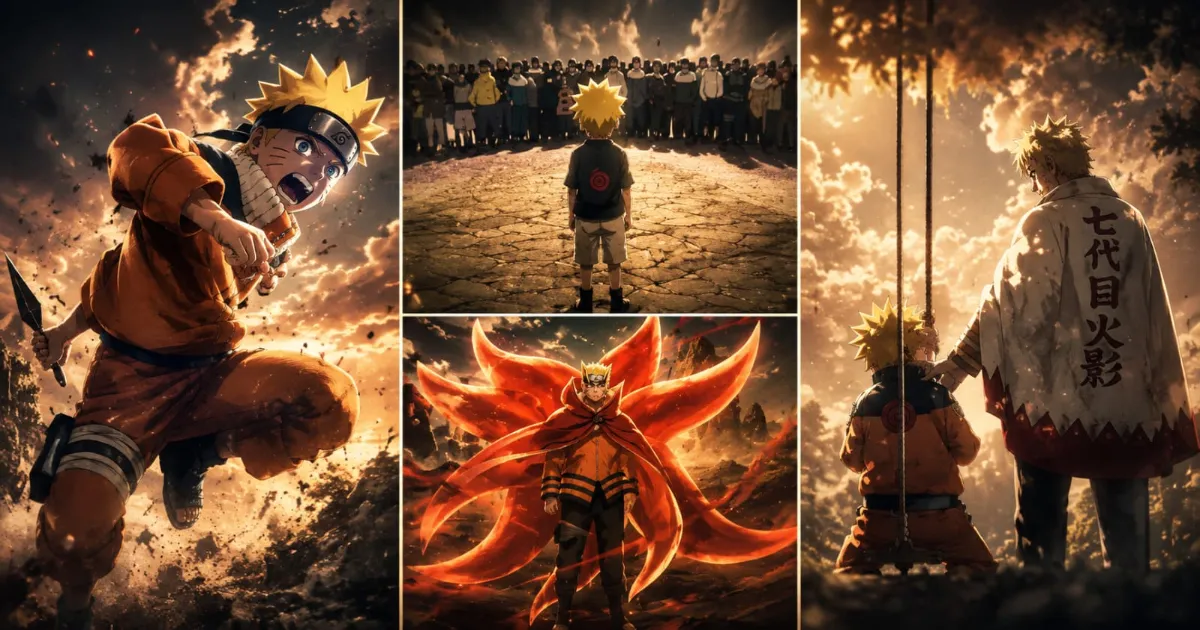
Before Naruto Uzumaki became one of the most important shinobi in the world, he was simply the loud, troublesome boy nobody wanted around. In the Hidden Leaf Village, adults watched him with suspicion and children were warned to stay away from him. Naruto didn’t understand why. He only knew that people looked at him differently, and the more they ignored him, the harder he tried to make himself impossible to overlook. He pulled pranks, failed at the Ninja Academy and constantly talked about his dream of becoming Hokage. To everyone else, it was an unrealistic fantasy. To Naruto, it was the only way he knew to prove that he mattered.
10 Biggest MCU Questions Avengers: Doomsday Must Answer Before Secret Wars
The reason for the villagers’ fear was hidden from Naruto himself. On the night he was born, the Nine-Tailed Fox attacked the Hidden Leaf, threatening to destroy the village. The Fourth Hokage, Minato Namikaze, fought the beast and ultimately sacrificed his life to seal the Nine-Tails inside his newborn son. Naruto’s mother, Kushina Uzumaki, also died during the tragedy. The village survived, but the child left behind became a living reminder of its greatest disaster. Naruto grew up without knowing the truth about his parents or why so many people treated him as if he were dangerous.
Everything began to change when Naruto met Iruka Umino. After Naruto was manipulated into stealing a forbidden scroll, Iruka put himself between the boy and danger. For perhaps the first time, Naruto understood that someone genuinely cared about him. Iruka’s acceptance became one of the first important bonds in his life, and it helped Naruto take the first real step toward becoming a shinobi.
After finally graduating from the Academy, Naruto was placed on Team 7 alongside Sakura Haruno and Sasuke Uchiha, under the leadership of Kakashi Hatake. The three could hardly have been more different. Naruto was energetic and desperate to prove himself, Sakura was intelligent but inexperienced, and Sasuke was a naturally gifted Uchiha carrying the weight of a devastating past. Kakashi immediately recognized that their greatest weakness wasn’t a lack of power but their inability to work together.
Their famous bell test taught them the lesson that would eventually define Naruto’s entire story: a shinobi who thinks only about himself cannot truly succeed. Team 7 gradually became more than a collection of students. Naruto and Sasuke began as rivals, but beneath their constant competition was a strange connection. Both boys were lonely, both wanted recognition and both were trying to deal with pain they didn’t fully understand. Naruto would eventually realize that Sasuke wasn’t merely his teammate or rival. He was someone he could not allow himself to lose.
Their first major mission took Team 7 to the Land of Waves. What should have been a routine escort quickly turned into a fight against the rogue ninja Zabuza Momochi and his young companion Haku. The battle was Naruto’s first real glimpse into the darker side of the shinobi world. Haku was an enemy, yet his devotion to Zabuza revealed that people could fight and die for reasons far more complicated than simple good and evil. Naruto saw himself in Haku’s loneliness and began questioning what it really meant to be a ninja.
The tragedy of the Land of Waves changed him. Naruto no longer saw becoming Hokage merely as a way to gain attention. He wanted to become strong enough to protect people and stand by his beliefs. The mission also revealed something that would repeatedly appear throughout his journey: Naruto’s greatest strength was not simply his chakra or physical ability. It was his capacity to understand people who had lost their way.
The Chunin Exams brought Naruto into contact with a generation of young ninja who would eventually become his closest allies. Rock Lee challenged him to see the value of hard work, Neji Hyuga forced him to confront the idea of destiny, and Gaara became a terrifying reflection of what Naruto might have become if loneliness had consumed him completely.
Naruto’s battle with Neji was especially important. Neji believed that people were trapped by their birth and that certain individuals were destined to remain failures. Naruto rejected that idea completely. He had been treated as an outsider since birth, yet he refused to accept that his circumstances determined his future. When Naruto defeated Neji, it wasn’t simply an upset victory. It was the first major declaration of one of the series’ central ideas: your past can shape you, but it does not have to control you.
The Chunin Exams eventually descended into chaos when Orochimaru and his allies attacked the Hidden Leaf. Orochimaru became interested in Sasuke’s potential and placed the cursed seal on him, feeding the young Uchiha’s growing obsession with power. At the same time, Naruto faced Gaara, another jinchuriki who had been raised in isolation and fear.
Gaara had allowed his loneliness to turn into hatred. Naruto had experienced much of the same pain, but he had found people who slowly gave him a reason to trust others. Their battle became much more than a contest between two young ninja. Naruto defeated Gaara physically, but more importantly, he reached the person buried beneath the hatred. Gaara began to understand that he didn’t have to remain alone, and that encounter eventually helped transform him from a feared weapon into the Kazekage of the Hidden Sand.
While Naruto was discovering the value of friendship, Sasuke was becoming increasingly consumed by his desire for revenge. Years earlier, his older brother Itachi had massacred the Uchiha clan, leaving Sasuke as one of the only survivors. Sasuke’s entire identity became centered around one goal: killing Itachi.
Orochimaru offered Sasuke something Naruto couldn’t promise—power. When Sasuke realized that remaining in the village might prevent him from achieving his revenge, he made the decision that would change Team 7 forever. He abandoned the Hidden Leaf and left to train under Orochimaru.
Naruto refused to accept it. Their confrontation at the Valley of the End became the first true battle between the two friends. Sasuke won and continued on his path, but Naruto made a promise that would follow him for years: he would bring Sasuke home.
That promise might have seemed impossible at the time. It would eventually become one of the most important promises of Naruto’s life.
After training with Jiraiya for several years, Naruto returned to the Hidden Leaf as an older and more capable shinobi. The world around him had changed as well. The Akatsuki, a criminal organization made up of some of the most dangerous ninja alive, had begun hunting the tailed beasts and their jinchuriki.
Their first major target was Gaara.
By this time, Gaara had become Kazekage, proving just how far he had come since his battle with Naruto. But the Akatsuki captured him and extracted the One-Tail from his body, killing him in the process. Naruto was devastated. He understood what Gaara had been through because their childhoods had been painfully similar.
The rescue mission eventually succeeded, but Gaara’s death demonstrated the terrifying power of the Akatsuki. Chiyo sacrificed her own life to bring Gaara back, while Naruto watched another person make a tremendous sacrifice for someone she loved. The event reinforced the idea that Naruto had spent years learning: people become stronger through the bonds they create with others.
Sasuke eventually found Itachi and confronted him. Their battle was one of the most anticipated moments of his life. Sasuke believed that defeating his brother would finally free him from the pain of his childhood.
It didn’t.
Itachi died after their battle, but Sasuke soon discovered that the story he had believed all his life was incomplete. Itachi had not destroyed the Uchiha clan simply because he wanted power. The Uchiha were planning a coup against the Hidden Leaf, and the village leadership placed Itachi in an impossible position. He chose to sacrifice his clan, his reputation and eventually his own life to prevent a larger conflict, while secretly protecting Sasuke from the shadows.
The truth destroyed Sasuke’s understanding of his past. Instead of finding peace, he became even more determined to challenge the system that had created Itachi’s tragedy. Sasuke’s hatred shifted from one person to the entire Hidden Leaf.
Meanwhile, Naruto was about to suffer a loss that would change him forever.
The Perfect Lie Official Trailer: Netflix’s Intriguing New Dutch Mystery Drama
Jiraiya, Naruto’s mentor and one of the legendary Sannin, traveled to the Hidden Rain Village to investigate the mysterious leader of the Akatsuki. There he discovered that the person behind the terrifying identity of Pain was actually Nagato, one of his former students.
Jiraiya had once believed that Nagato could become someone capable of changing the world. Instead, years of suffering had transformed him into a man who believed that peace could only exist after humanity experienced overwhelming pain.
Jiraiya fought desperately but ultimately died. His death devastated Naruto. For a character who had lost his parents before he could even remember them, Jiraiya had become something close to family. Yet even in death, Jiraiya left Naruto a final gift: the belief that the future could be different.
Naruto traveled to Mount Myoboku and trained to master Sage Mode. This wasn’t simply another power-up. It represented his emotional growth. Naruto was beginning to understand that becoming Hokage wasn’t about forcing people to acknowledge him. It was about becoming someone capable of protecting them.
Then Pain came to the Hidden Leaf.
The attack destroyed much of the village and left countless people dead. Naruto returned in Sage Mode and confronted Pain in one of the defining battles of the entire series.
Pain was powerful, but his greatest weapon was his philosophy. Nagato believed that people could never understand one another without experiencing the same suffering. He wanted to create peace through fear and pain, believing that shared destruction would eventually force humanity to stop fighting.
Naruto rejected that idea.
After defeating Pain, Naruto didn’t kill Nagato. Instead, he listened to him. Naruto understood the hatred that had driven him because he had experienced loneliness and loss himself. But Naruto had chosen a different path.
That choice changed the shinobi world.
Nagato ultimately used his remaining strength to revive the people killed during the attack. The Hidden Leaf finally saw Naruto not as the troublesome child they had once feared, but as the person who had saved them.
The boy who once desperately wanted acknowledgment had finally received it.
But Naruto’s greatest battle was still ahead.
The masked man known as Tobi declared the beginning of the Fourth Great Ninja War. The Five Great Shinobi Nations joined forces against the Akatsuki, and Naruto entered the battlefield alongside the very people who had once doubted him.
The war revealed secrets that stretched back decades. The masked man’s identity was eventually exposed as Obito Uchiha, a former teammate of Kakashi who had once dreamed of becoming Hokage himself.
Obito’s story was painfully similar to Naruto’s. He had experienced loss, loneliness and disappointment, but instead of continuing to believe in people, he allowed his pain to convince him that reality itself was meaningless. His plan was to cast the Infinite Tsukuyomi, trapping humanity inside a perfect illusion.
Naruto fought Obito not only with techniques but with the power of his own choices. Both men had suffered. Both had lost people they loved. The difference was that Naruto refused to let suffering decide who he would become.
As the war continued, another legend returned: Madara Uchiha.
Madara’s history was connected to the very foundation of the Hidden Leaf. He had once stood beside Hashirama Senju, the man who would become the First Hokage. Together, they dreamed of creating a world where children would no longer be forced to fight endless wars.
But their visions of peace eventually became incompatible. Hashirama believed cooperation could create lasting peace, while Madara came to believe that the shinobi world was trapped in a cycle of hatred that could never truly be broken.
Madara’s return pushed the war to an entirely different level. Naruto and Sasuke eventually received the power of Hagoromo Otsutsuki, the Sage of Six Paths, and discovered that their rivalry was connected to an ancient cycle of conflict between the descendants of Hagoromo’s sons.
Just when Madara appeared to be the final enemy, however, the story revealed an even older threat.
Black Zetsu betrayed Madara and revealed that the plan had ultimately been designed to resurrect Kaguya Otsutsuki, an ancient being connected to the origin of chakra itself.
Kaguya possessed power far beyond anything Naruto and Sasuke had previously faced. The battlefield transformed into a series of different dimensions as the two tried to stop her.
With the help of Sakura and Kakashi, Naruto and Sasuke eventually managed to seal Kaguya away.
The war was finally coming to an end.
But Naruto’s greatest battle wasn’t against Kaguya.
It was against the person he had been trying to save for years.
Sasuke still believed that the shinobi world needed to be completely transformed. He wanted to take control of its conflicts himself and become the single figure carrying the world’s hatred.
Naruto couldn’t accept that future.
The two returned to the Valley of the End, the same place where their first major confrontation had taken place. This time, however, Naruto wasn’t fighting because Sasuke was his rival. He was fighting because Sasuke was his friend, and Naruto had never abandoned the promise he made to bring him home.
Their final battle pushed both of them to their absolute limits. Naruto’s enormous chakra reserves and Six Paths abilities clashed with Sasuke’s Sharingan and Rinnegan. They fought until both were exhausted, wounded and barely capable of moving.
In the end, Sasuke finally accepted Naruto’s answer.
He had spent years trying to cut every bond from his life.
Naruto had spent those same years proving that bonds were worth protecting.
Sasuke admitted defeat.
The cycle between them finally ended.
After the war, the shinobi world entered a new era. Old enemies began working together, the villages moved toward cooperation and Naruto’s dream slowly became reality.
The boy who had once failed at basic ninja techniques eventually became one of the greatest shinobi in history.
And then he became the Seventh Hokage.
That moment carries much more meaning than simply receiving a title. Naruto began his life as an orphan carrying the Nine-Tails, a child whom the village feared and avoided. He spent years trying to force people to notice him, only to discover that true recognition doesn’t come from shouting the loudest or becoming the strongest.
It comes from the people whose lives you change.
Naruto changed Gaara.
He changed Nagato.
He changed Obito.
He changed Sasuke.
And, eventually, he changed the entire Hidden Leaf’s perception of him.
The Naruto Story Explained in simple terms is a journey from loneliness to connection, from hatred to understanding and from an impossible dream to reality. The series contains enormous battles, legendary powers and complicated ninja politics, but its emotional core is remarkably simple.
Naruto starts as a child who wants people to acknowledge him. Sasuke starts as a boy who believes revenge is the only thing giving his life meaning. Gaara believes nobody can ever love him. Nagato believes pain is the only language humanity understands. Obito believes the real world isn’t worth saving.
Each of them faces suffering.
What separates Naruto from the others is what he does with it.
He chooses not to let his pain become an excuse to hurt everyone else.
That is ultimately why Naruto becomes Hokage. Not because he is the strongest person in the world, and not because destiny simply hands him the position, but because he repeatedly chooses to understand people when it would be easier to hate them.
His journey begins with a lonely boy sitting alone in the Hidden Leaf.
It ends with that same boy standing at the center of a world he helped save.
Naruto wanted to become Hokage because he thought the title would finally make people acknowledge him.
By the end, he discovers something far more important.
He didn’t need the title to prove that he mattered.
The bonds he created had already done that.
The Strongest Avengers Expected to Appear in Doomsday, Ranked
KATSEYE Fans Get Their Answer as Lara Raj Confirms Manon’s Appearance