Physical Address
304 North Cardinal St.
Dorchester Center, MA 02124

Sixty years after its release, Guide remains one of the few Hindi films that critics, casual viewers, and hardcore cinephiles all reach for when the conversation turns to the greatest movie Bollywood has ever produced. That kind of consensus is rare in any film industry. For a film this bold, this morally ambiguous, and this unusual for its era, it’s a genuinely remarkable achievement — and one worth understanding on its own terms rather than simply taking on faith.
Awarapan 2 Trailer Review: Emraan Hashmi Brings Back a Cult Classic
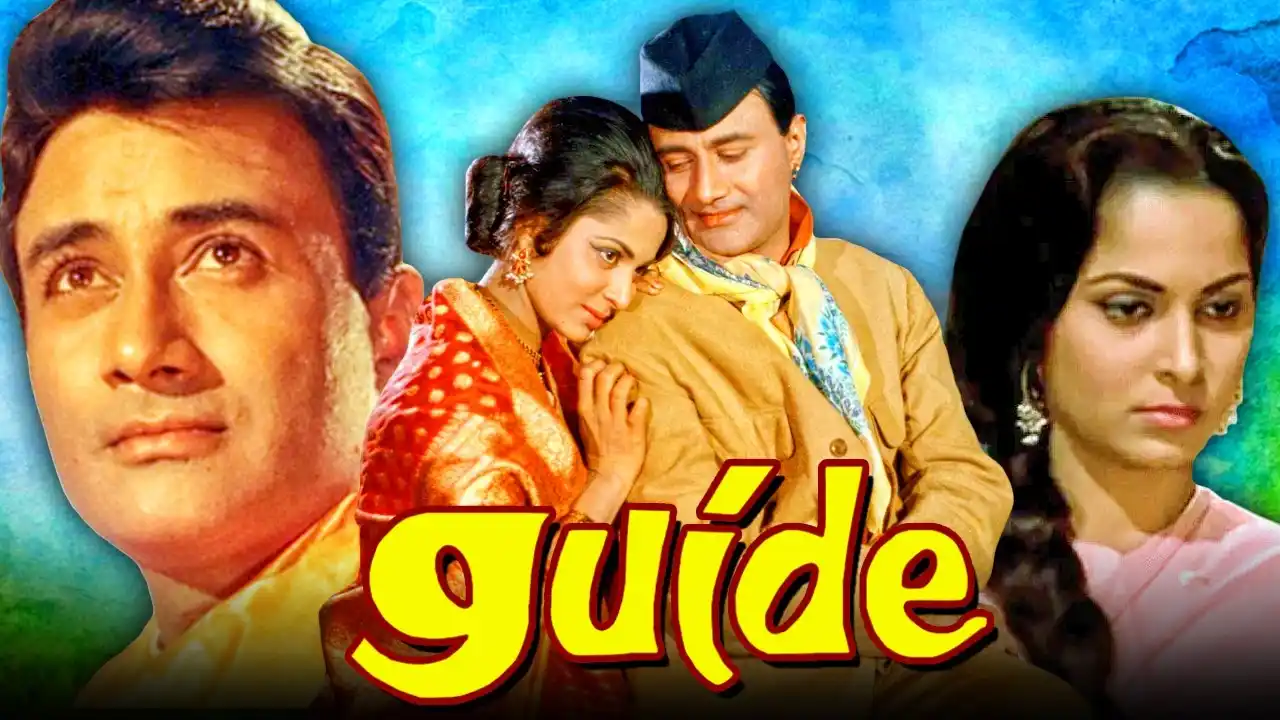
Directed by Vijay Anand and produced by his elder brother Dev Anand through their Navketan Films banner, Guide is adapted from R.K. Narayan’s acclaimed 1958 novel of the same name. Dev Anand stars as Raju, a freelance tourist guide in Udaipur who falls into an affair with Rosie, played by Waheeda Rehman, the emotionally neglected wife of a cold, controlling archaeologist named Marco. What begins as a romance evolves into something far stranger and more ambitious: Raju helps transform Rosie into a celebrated classical dancer, only to see his own choices spiral into fraud, imprisonment, and eventually an accidental, almost mystical rebirth as a spiritual guide revered by an entire village who mistake his circumstances for holy asceticism.
It’s a plot that refuses easy categorization — part romance, part morality tale, part meditation on identity and redemption — and that refusal to sit comfortably in one genre is a large part of why the film has aged so distinctively compared to its contemporaries.
Guide’s reputation as a bold film isn’t retrospective flattery. In the context of mid-1960s Hindi cinema, a story centered on a married woman’s extramarital affair, treated with genuine emotional sympathy rather than moral condemnation, was a significant departure from the era’s conventions. Rosie is never simply punished by the narrative for stepping outside her marriage; she is allowed ambition, artistic hunger, and agency in a way Hindi cinema heroines of the period rarely were. Raju, meanwhile, is neither a straightforward hero nor a villain — he’s selfish, resourceful, deeply flawed, and ultimately transformed by circumstances largely outside his control, a character arc built on ambiguity rather than the clean moral arithmetic most commercial films of the era relied on.
The film also marked Dev Anand’s first production in color, and cinematographer Fali Mistry’s work — particularly the location shooting around Udaipur and Chittorgarh — gave the film a visual scope that matched its narrative ambition. S.D. Burman’s music, paired with Shailendra’s lyrics, produced a soundtrack still regarded as one of Hindi cinema’s finest, anchored by songs like “Aaj Phir Jeene Ki Tamanna Hai” and “Gaata Rahe Mera Dil,” the latter filmed only after principal photography on the rest of the film had wrapped.
Made on a budget of roughly ₹6 million, Guide performed strongly on release, finishing as the fifth highest-grossing Hindi film of 1965 — a genuinely impressive commercial result for a story this morally complex and tonally unconventional. That combination of box office success and critical acclaim is part of what separates Guide from many “important” films that are respected but rarely watched; audiences in 1965 didn’t just admire it from a distance, they turned out for it in real numbers, and it went on to sweep major honors at the following year’s Filmfare Awards.
Guide’s staying power comes down to a combination of factors that rarely align this cleanly in a single film. The performances anchor everything: Dev Anand’s turn as Raju is widely considered the finest of his career, a role that let him move beyond his usual charming-rogue persona into genuinely difficult emotional territory, while Waheeda Rehman’s Rosie remains one of the most fully realized female characters of the era. The music has never stopped being played, giving the film a continuous cultural presence even among audiences who’ve never seen it in full. And the story’s central ideas — the unreliability of identity, the strange line between fraud and genuine spiritual transformation, the cost of personal freedom — have aged remarkably well for a film pushing sixty years old, resonating with each new generation of viewers largely on their own terms.
Its critical stature has only solidified with time. The Cannes Film Festival screened Guide in 2007, 42 years after its original release, introducing it to an international arthouse audience largely unfamiliar with Hindi cinema of the period. More recently, restored prints have been given proper theatrical re-releases as part of retrospectives honoring Dev Anand’s legacy, curated by India’s National Film Development Corporation and the Film Heritage Foundation — the kind of institutional preservation typically reserved for a film industry’s most significant works.
Guide isn’t simply a well-made period piece worth appreciating out of historical obligation. It remains a genuinely absorbing, emotionally complicated film that happens to have been made in 1965 — a story about ambition, freedom, and the strange accidents that reshape a life, told with visual and musical craftsmanship that hasn’t dated the way so much of its era has. That’s the real explanation for its cult status: Guide isn’t beloved because it represents Bollywood’s past. It’s beloved because, watched today, it still doesn’t feel like it belongs entirely to the past at all.