Physical Address
304 North Cardinal St.
Dorchester Center, MA 02124

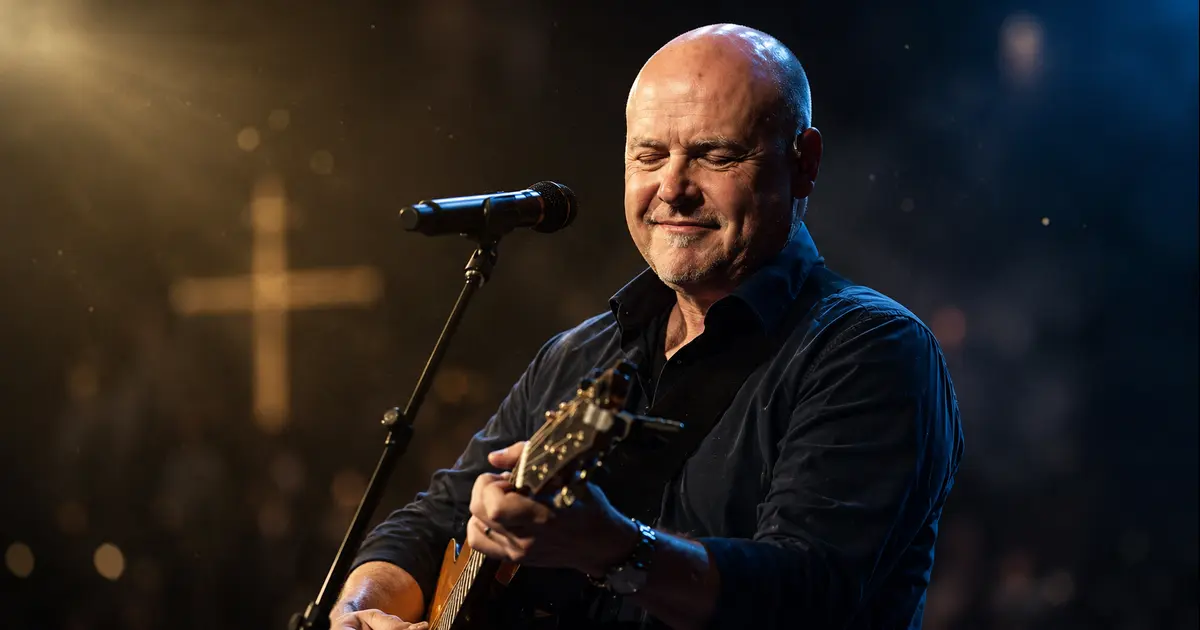
There’s a particular kind of influence that never quite makes the charts, and Canadian singer-songwriter Brian Doerksen spent more than three decades quietly building exactly that kind of legacy. He died on July 21, 2026, at his family home in Abbotsford, British Columbia, following a brief and aggressive battle with stage four cancer. He was 60. In a statement shared on his official Instagram account, his family said he passed away peacefully in his sleep at 6:45 a.m., “surrounded by those who loved him most.”
Doerksen’s illness moved with alarming speed. According to his family and Canadian Christian radio station CHVN-FM, doctors discovered cancerous masses throughout his body only shortly before his death, after months of severe, previously unexplained pain. Even at that late stage, the specific type of cancer was never publicly confirmed. In the days immediately preceding his passing, his family shared that his kidneys had failed, and his medical team recommended keeping him comfortable at home rather than pursuing further treatment. It was, by every account since released, a swift and difficult decline for a man who had spent his career writing songs about endurance, surrender and faith under pressure.
His family’s final public statement captured the tone of his last days as much as the facts of them: “Till the very end, Brian continued to love those around him,” they wrote, describing how he continued encouraging visitors, thanking the doctors and nurses caring for him, and remaining, in their words, “a beacon of light” to everyone around him. The family also thanked what they described as an entire global community that had prayed, given, and sent messages of love throughout his illness — a fitting final image for a songwriter whose work had always been defined by exactly that kind of collective, congregational spirit.
Doerksen’s professional reputation was built less on personal stardom than on the strange, specific kind of ubiquity that worship songwriting allows — his songs filled congregations on nearly every continent, often without those singing along ever knowing his name. “Come, Now Is the Time to Worship” became his signature composition, spreading through local churches across denominational and cultural lines well before the internet made that kind of reach easy to track. Notably, a new version of the song recorded with House of Worship and the artist Leeland was released as recently as January 2026, proof that its welcome to congregations hadn’t aged even after more than two decades in circulation.
“Refiner’s Fire,” one of his foundational compositions from his years at Langley Vineyard Christian Fellowship, became one of the most enduring prayers of personal surrender to emerge from the broader Vineyard movement — a song that gave congregations plainspoken, singable language for holiness rather than abstract theology. Alongside it sit “Purify My Heart,” “Faithful One,” “Today,” “When You Shepherd Me,” “Holy God” and “Light the Fire Again,” a catalogue that, by the measures worship music actually uses to track influence — CCLI licensing reports, hymnal inclusion, sheer longevity of use in weekly services — placed him among the most significant songwriters in contemporary Christian worship.
Doerksen was born Brian Robert Doerksen on November 17, 1965, and grew up within the Mennonite Brethren church in British Columbia, graduating from the Mennonite Educational Institute in 1983. He joined the staff of Langley Vineyard Christian Fellowship in his early twenties, serving as a worship pastor through the late 1980s and into the early 1990s — a period that placed him directly at the center of the broader Vineyard Churches movement during exactly the years it was reshaping how contemporary Christian congregations approached musical worship. Vineyard Worship’s own tribute following his death made that connection explicit: “Brian was one of the fathers of Vineyard Worship,” the organization wrote. “Through his songs, leadership and friendship, he helped shape worship in the Vineyard and, far beyond that, the worship of the global Church.”
That description captures something important about how Doerksen’s career actually functioned. He was never positioned, or apparently interested in being positioned, as a conventional recording artist chasing broad commercial visibility. His influence ran instead through the quieter infrastructure of congregational life — worship pastors learning his songs, hymnals including his compositions, individual churches passing his music along without necessarily crediting the source. It’s the kind of legacy that rarely generates mainstream headlines while a songwriter is alive, and that’s precisely what makes tribute coverage following his death, from outlets spanning Christian and mainstream music press alike, feel like a genuine, if belated, reckoning with the scale of what he actually built.
Multiple tributes following his death have been careful to note that Doerksen’s legacy extends past his catalogue of songs. Those who worked alongside him have described a ministry built as much on humility and personal presence as on musical output — a worship leader whose relationships with congregations and fellow songwriters were, by numerous accounts, as central to his impact as any individual composition. That framing matters particularly given how his final days were characterized: a man reportedly more focused on encouraging the people around him, and thanking those caring for him, than on anything resembling a public farewell.
Worship music has an unusual relationship with permanence — unlike much of commercial popular music, songs written for congregational use tend to remain in active rotation for decades, sung by generations of churchgoers who may have no specific awareness of when or by whom a given song was written. That dynamic all but guarantees Doerksen’s catalogue will continue to be sung in services long after this week’s tributes fade from news cycles, in exactly the same way it had already been sung for more than thirty years before his death. Few songwriters in any genre can claim that kind of durable, largely anonymous reach. Doerksen, by every account released since his passing, seemed to have made peace with exactly that trade-off years ago — writing songs built to serve congregations rather than to build a personal brand, and finding, in that choice, precisely the kind of legacy that has now outlived him.